

Since last week’s local and devolved elections, I’ve heard a lot of the I-word floating around. How inevitable everything was. How voters were dissatisfied with the pace of change so it was inevitable that Labour would lose.
Both in Wales and Westminster, there’s a sort of cynical resignation from pundits who think, “Yeah, it was a disaster for Labour. But could anyone have done any better?”
In a Welsh context, I think it’s probably true that Labour would have lost control of the chamber no matter what. And you know what? I think that’s a good thing. It’s not natural for a single political party to dominate for nearly 30 years. Going back to the word of the week: such a long time in power will inevitably lead to stagnation and complacency.
Now here’s where I think all the inevitability falls short. While I agree with the kind words and tributes that have been offered to the (now former) First Minister Eluned Morgan, I think she had cards in her hand that she didn’t play.
Morgan came into power just after the (debatable) Labour landslide in the 2024 general election. With a 200-seat majority in Westminster, it was time for Labour to step up and deliver on the promises they’d been making. Finally, an end to austerity. A relationship built on respect and solidarity, with Labour in power on both ends of the M4. Let the good times roll.
And then, a month into her premiership, Labour stood by while Port Talbot steelworks closed. When Plaid Cymru called for Port Talbot to be nationalised, Morgan called it a pipe dream. Less than six months later, Keir Starmer called an emergency session in the House of Commons when Jingye announced that they would be closing the steelworks in Scunthorpe.
That’s right. Nationalisation in Wales is a pipe dream. In England, it’s all hands on deck.
Imagine if Eluned Morgan had gone down to Port Talbot, met with the workers, and held a press conference where she said she was going to fight for the plant. It wouldn’t have guaranteed anything, but it would’ve made her position clear to the people of Wales—it would have shown that her loyalty was to her country rather than her party.
And what about the HS2 funding? When England invests in English-only rail infrastructure, it’s required to make a similar investment in rail in Cymru, Northern Ireland, and Scotland. Initially, HS2 was meant to run between London and Manchester. It’s since been scaled back to Birmingham. All cities involved are in England.
Northern Ireland received funding. Scotland received funding. Wales didn’t. That’s because it was declared an England-and-Wales project. Again, not an inch of the track was ever set to run in Cymru. Before the project, Jo Stevens (Labour MP for Cardiff East) said, “It’s utterly illogical to designate [HS2] an ‘England and Wales’ project.” A year later, with the reigns of power to hand, Stevens declared, “We can’t go back in time and change the way that [HS2] was commissioned, was managed, and classified.” (Quotes taken from Will Hayward’s brilliant Who Cares About Wales?)
TLDR: No HS2 consequentials for Cymru.
In a truly shameful bit of political theatrics, Stevens took to Wales Online this week to blame Labour’s losses in Wales on its tree-planting programmes to meet climate goals (cost £270,000/annually, or .001% of the budget) and 20 mph roll-out (which has been shown to reduce collisions and save lives). Why? Because it’s easier—and cheaper—than actually tackling the real issues at hand, like HS2 consequentials.
Like the soon-to-be former Prime Minister, Stevens is leaning into the idea that the way forward for the party lies in picking up Reform’s talking points and running with them. In fairness to Morgan, I never heard her make this mistake. She tried to create space between Welsh Labour and Westminster, but without great effect.
In a speech in May 2025, Morgan declared: “We saw them take our coal. We saw them take our water. We will not let them take our wind, not this time, not on my watch.”
Yet, the delivery failed as Morgan tried to speak from both sides of her mouth—placating Welsh resentment, while showing UK Labour that she was a team player. Her version of going toe-to-toe with Starmer sounds like a line from a job interview, with the candidate being asked about how they handle internal disagreements—not a national leader going to bat for her country.
As Will Hayward points out so effectively in Who Cares About the Welsh?, the Scots consistently get a better deal than the Welsh because they demand it. Rather than going “cap in hand” to Westminster, they’re standing with one foot out the door, ready to go if their partnership in the union doesn’t deliver what they expect.
Cymru doesn’t need Jo Stevens balking at “woke” Labour policies and throwing her compatriots under the bus—not least of all when she hasn’t lifted a finger to help. We need a national champion who will lay out the issues clearly, and with moral conviction.
Think about Mark Drakeford’s response when he faced questions about the NHS in the Senedd. He got so angry at Tory hypocrisy he nearly gave himself a papercut. While he later apologised for his behaviour, many people across Wales appreciated what they perceived as a righteous anger over being asked to do more with less by the very party holding the purse strings.
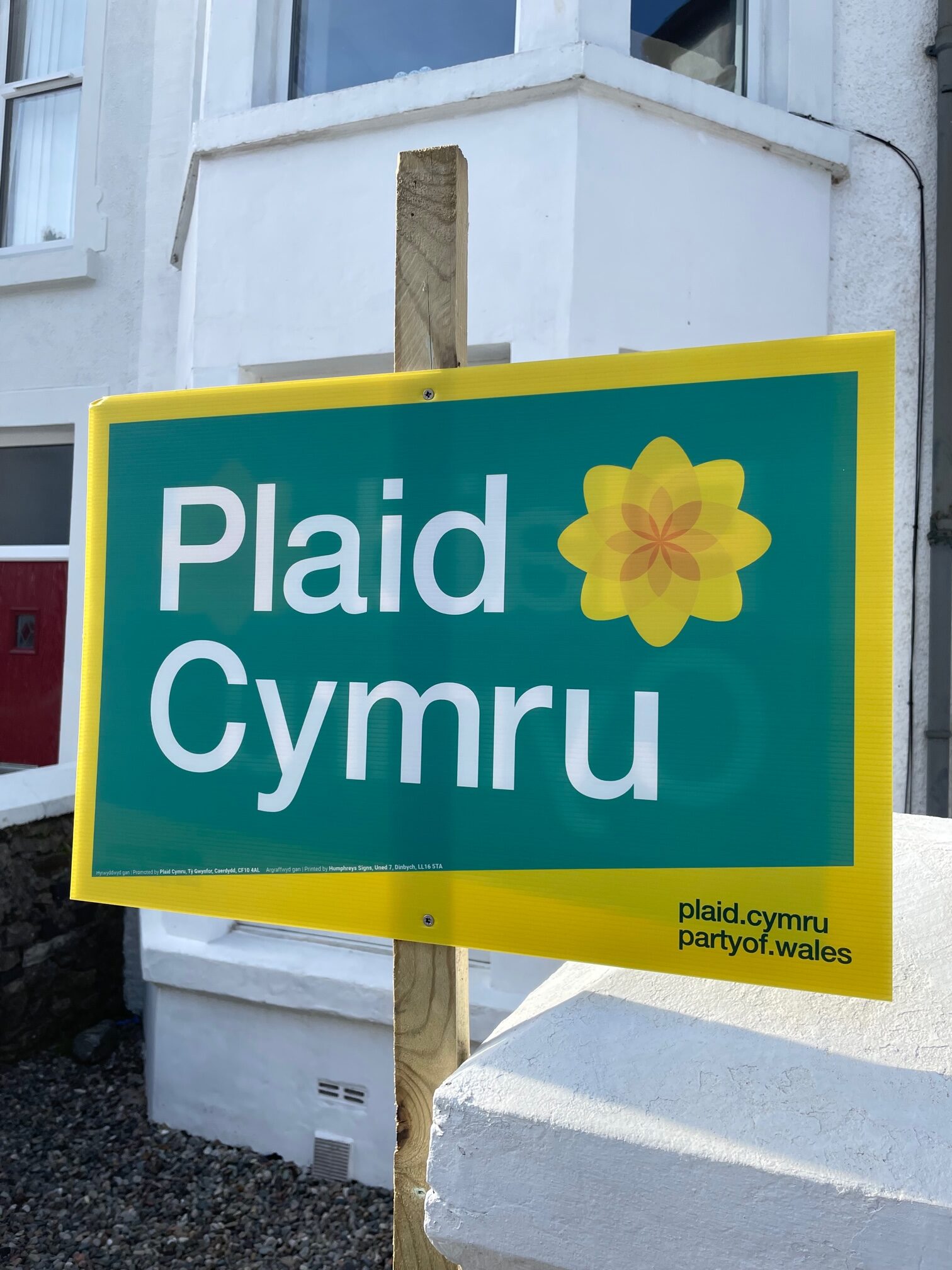
Now, voters have turned to Rhun ap Iorwerth and Plaid Cymru not because a majority of the Welsh electorate are ready for an independence referendum, but because people expect to be treated better—especially from a party they’ve given their loyalty to for a century.
Ap Iorwerth has shown two key things:
- He is as measured in his leadership and presence as he is passionate about Cymru. Look for example at the famous interview in which he lays out the absurdity of classifying HS2 as an England-and-Wales project. Or his quick-witted and level response when Dan Thomas suggested that he might punch ap Iorwerth if they went out for a pint. He is able to channel voters’ indignation in a way that he doesn’t need to ineffectually chant “I get it,” and neither does he need to shout or get angry.
- He isn’t afraid to embarrass Labour leaders in Westminster. Even in defeat, Morgan was gracious to Starmer. While this might speak well to Morgan’s fundamental decency and moral fibre, it doesn’t suit the mood of voters who are angry—and desperate for someone, anyone, to listen.
In fairness to Morgan, she stepped into an uncomfortable space following Vaughan Gething’s resignation after a few months in office. Welsh Labour made important moves to support Port Talbot following the closure of the steelworks. She said many of the right things when it came to fair funding for Wales.
I doubt she could’ve done anything to completely stem the tide—but on the left and the right, voters are looking for a champion. Some aggressive page-flipping in the Senedd chambers, some public shaming from Port Talbot. Labour might still be out of power, but she could’ve held her seat.
If you enjoy my writing, please consider supporting me on Patreon for as little as $2/month!