I love children’s literature. Good children’s literature reminds us why we read in the first place: the adventure, the joy, the thrill—and the deep contentment of coming home again at the journey’s end.
And few do that better than C.S. Lewis. Not only is he clever and creative, he knows how to write for children in a way that’s authentic and meaningful. There’s nothing heavy-handed or condescending in his writing. He understands that children are just as clever as adults—if not cleverer.
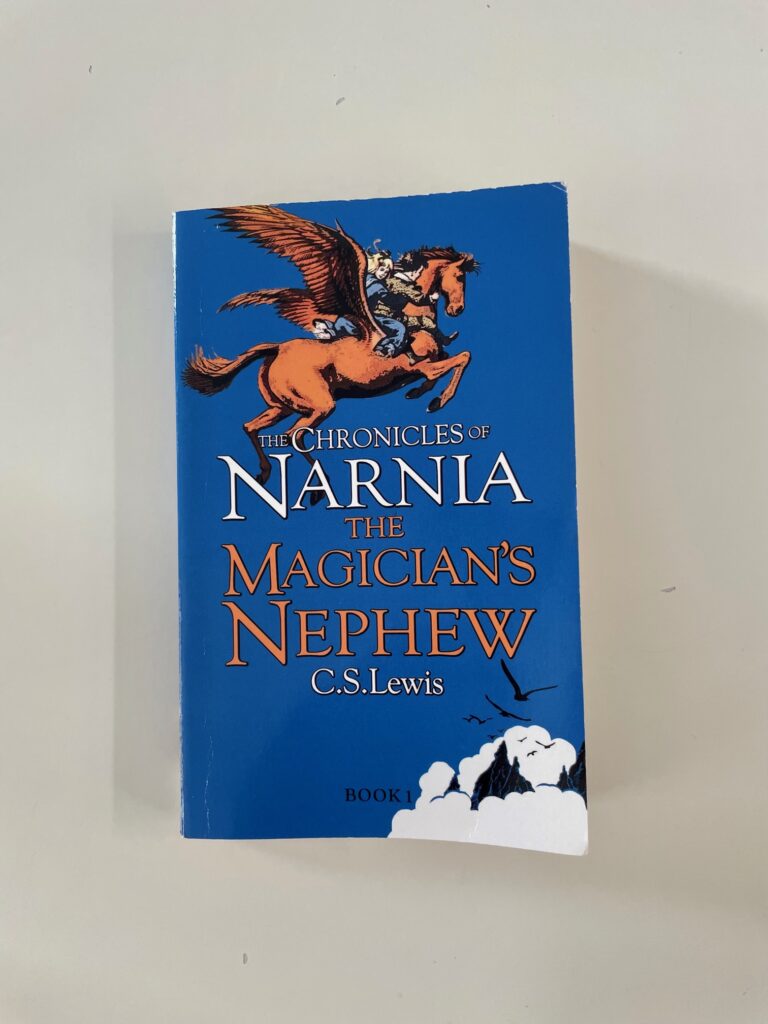
I’ve just re-read The Magician’s Nephew, the first book in The Chronicles of Narnia. As far as I can remember, it’s only my second time reading it. I can’t quite recall, but when I was young, I think my Dad told me to save it for last, or second last. When I finally read it, I don’t think I liked it all that much. Maybe at that age, I was craving an escape from our world and so I wanted more of Narnia and less Edwardian London. Or maybe it was Uncle Andrew who gave me the creeps.
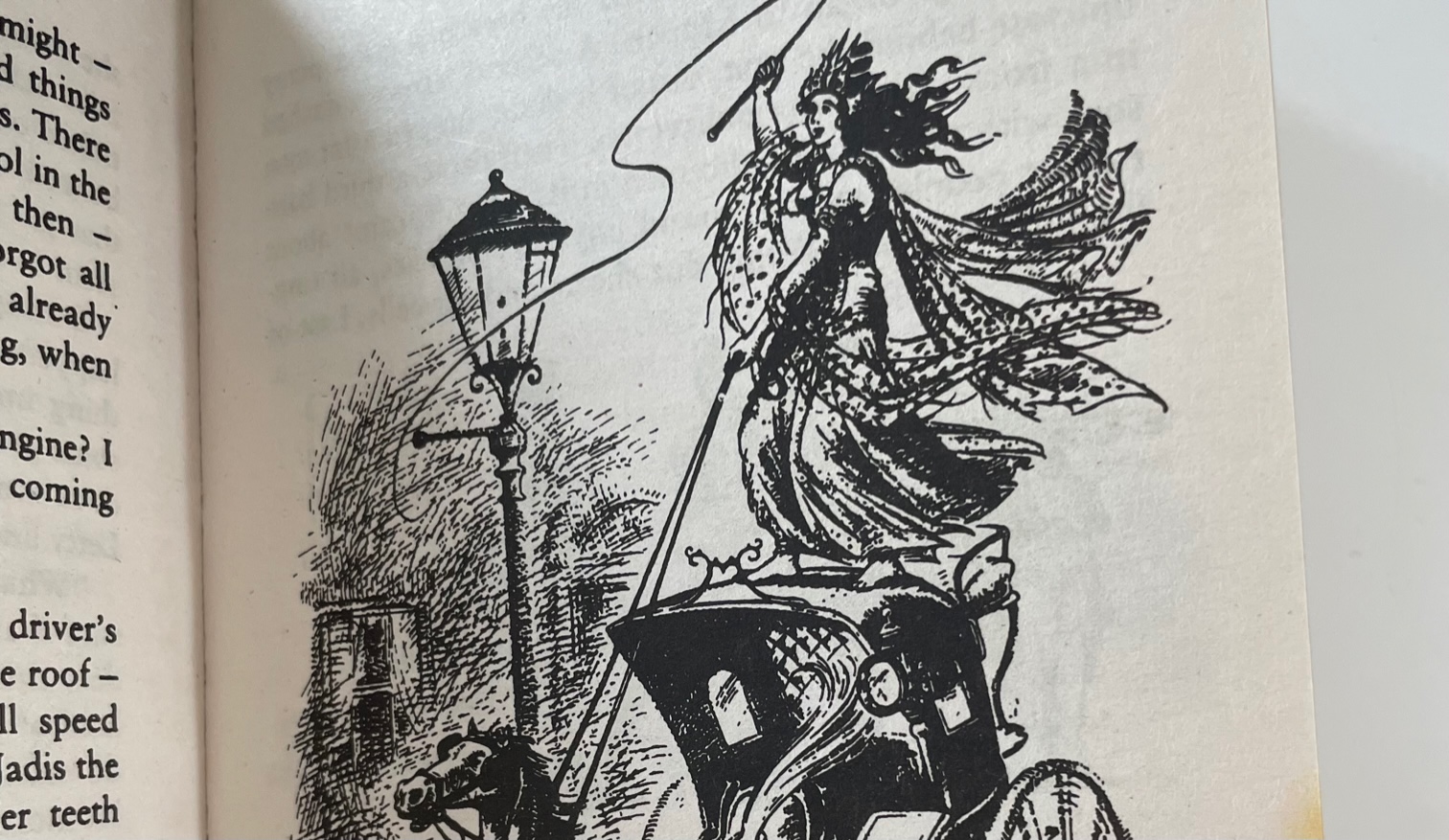
As an adult, it’s a deeply satisfying read. Well paced, funny—at times chaotic. With the film version coming out next year, I cannot wait to see the carriage chase through London. The Magician’s Nephew connects so much in the later stories: the wardrobe, the lamp post, and Jadis (the White Witch).
Lewis’ Quiet and Clever Humour
Lewis is actually a very funny writer. Not in a way that you’ll be slapping your knees laughing, but in the gentle chuckle from witty observation.
In The Magician’s Nephew, the greatest example of this is Digory’s Uncle Andrew, who moves from primary villain to comic relief after he arrives in Narnia and finds himself surrounded by a herd of talking animals. In shock, he can’t understand a word the animals say. Likewise, the animals have trouble making out any of Uncle Andrew’s gibberish besides his desperate plea for a drink—so they name him “poor old Brandy.”
Lewis is good at the details. One of my favourite asides in The Magician’s Nephew is the recurrence of the housemaid, Sarah, who is never at the centre of the action, but whose experience amid the chaos of Empress Jadis wreaking havoc in London is parenthetically strung along to tremendous effect. You can imagine the faces she’s making as she struggles to hold it together and keep herself from laughing (if the film adaptation doesn’t play this up, I’ll be furious).
His Characters Are More Than Their Circumstances
One of my favourite things about C.S. Lewis is that he understands that people are more than their circumstances.
In The Magician’s Nephew, you see this most obviously with the cab driver, Frank. He’s never an unkind character, but city life in London has changed him. As soon as he sets foot in Narnia, he undergoes a change—as all the characters do—to become a little bit more his own self, to drop the defences that he has acquired from the rough life of a city cabbie.
Conversely, we witness the unmasking of the story’s early villain, Uncle Andrew, and find that he’s not nearly so sinister as we might’ve initially believed. Removed from his secretive lair and seat of power in London, he becomes entirely different—small, silly, and rather sad.
As much as his imagination, Lewis’ empathy and understanding make him a remarkable writer. Behind the most ordinary children are kings and queens of Narnia waiting for the opportunity to be their full selves.
Aslan’s Warnings Remain (Unfortunately) Relevant
I love children’s literature with a good moral compass—that reaches into the split moments when characters decide between right and wrong, that recognises that people who make bad decisions don’t often make them because they are bad, but because they are scared, jealous, or insecure. Edmund is such a great example of this in The Lion, The Witch, and the Wardrobe. You can really hate him for his betrayal of Lucy, and quietly appreciate his redemption.
We see a bit of this again in Digory’s confrontation with Jadis in The Magician’s Nephew, and his earlier insistence on ringing the bell to start the whole adventure over Polly’s protests.
The thing that sticks with me in re-reading the book is the Deplorable Word—the magic weapon that has wreaked a violent and terrible end in the empire of Charn, Jadis’ home, and Aslan’s warning to Digory and Polly: “It is not certain the some wicked one of your race will not find out a secret as evil as the Deplorable Word and use it to destroy all living things. And soon, very soon, before you are an old man and an old woman, great nations in your world will be ruled by tyrants who care no more for joy and justice and mercy than the Empress Jadis. Let your world beware.”
What are your favourite moments in The Magician’s Nephew?
If you enjoy my writing, please consider supporting me on Patreon for as little as $2/month!