

Truth be told, learning to think of myself as a non-binary person has been a bit underwhelming. It’s not a liberatory revelation to discover that someone’s provided you a new label.
And that’s fine. While it might not be transformative, it can nonetheless be useful to expand your vocabulary, to find words that convey a little of your experience. Indeed, it’s comforting to know that I’m not alone—that I’m in the company of others who understand gender as a spectrum, who refuse to limit themselves to an artificially narrow experience of life.
At 18 or 19 years old, I felt an urgency to disclose that I was gay because it felt like a key piece of my identity that I’d been told to hide and be ashamed of for so long. Because of where I come from, it required some contextualisation at first. Some insistence on my virtue, a little reassurance that nothing about me had changed. I was still the same person. But when I finally found the courage to stop withholding my identity, it was liberatory.
I feel a bit less liberated these days.
Some of that must only be natural. I remember being 20. I would turn up The Killers or Lady Gaga to an unbearable volume in my bedroom and dance with the lights off. I felt free. Even better if I could sneak a glass of wine into the picture. And I kept chasing that sensation straight into dependency.
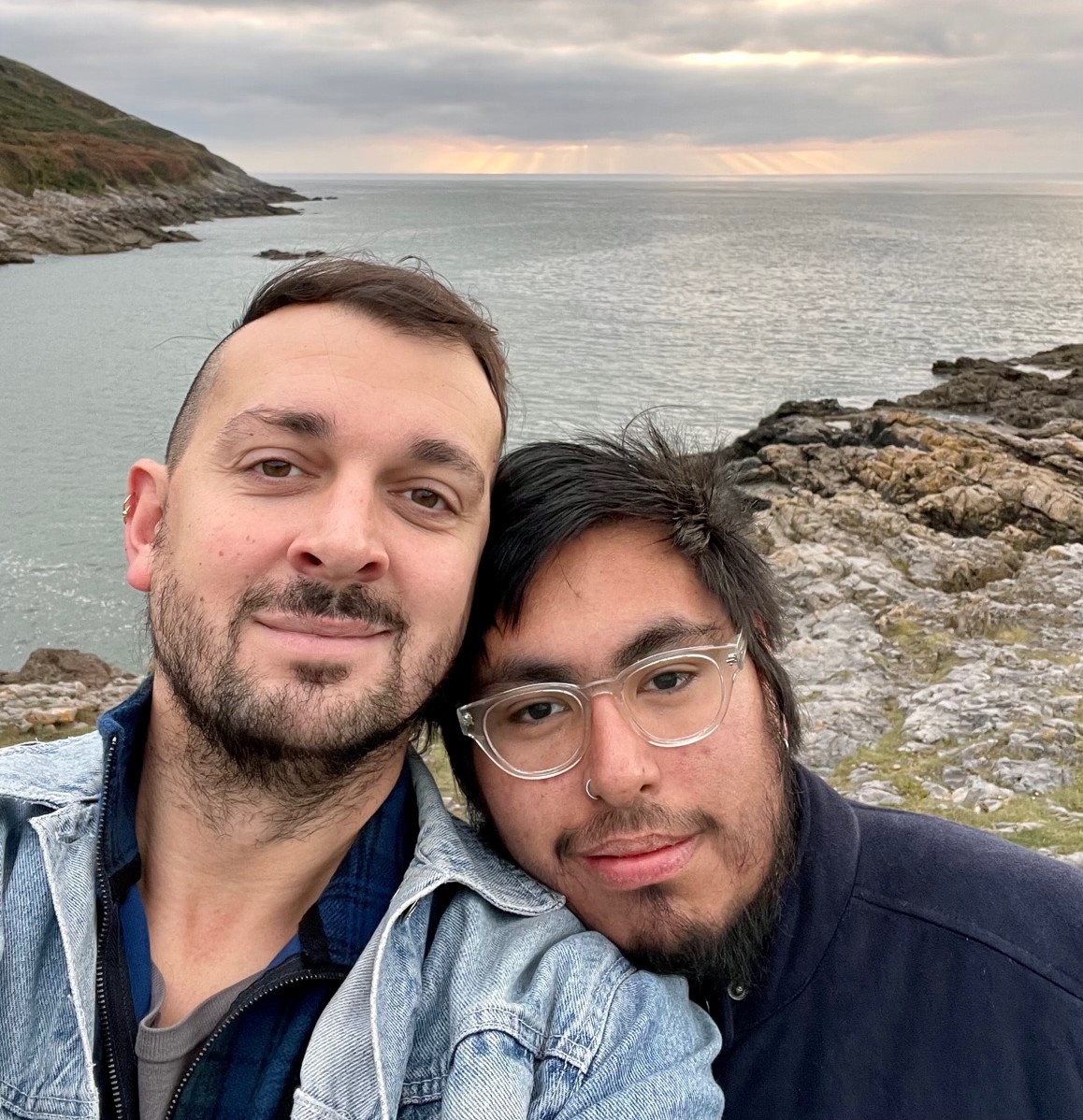
These days, the freest I feel is running at sunset on Swansea Bay or mile-long circles around Parque Centenario on a hot summer night. Quiet nights with my husband. The space he gives me to be vulnerable. I think that’s OK. I’d like to keep working on my anxiety, but I don’t feel like I’m running from something anymore. I don’t feel like I’m chasing a feeling with the bottle.
—
I think about the time I was 20 or 21 in Toronto with my friends. The small town, Bible Belt queer in the big city. The one who could face down the Vice President of Student Life and the College Board with poise and an almighty righteousness, but wanted to run and hide when confronted with a sea of half-dressed men in the summer heat.
A man, probably in his 50s, offered me his hand to dance in a club one night. I shook my head no and tried my best to pretend I was having fun, no thanks to him. He could see I was miserable and took pity on me. I was too spooked to see it.
I never felt free or liberated. I didn’t feel empowered. I felt scared. Worried. Anxious that I was improperly queer. Too frigid, too afraid to have fun, too pedestrian.
—
I wonder who pride is for.
There’s a woman I used to work with, we’re still friends on Instagram. She’s lovely. And as far as I know, she’s straight. I see her get dressed up for Pride each year, with the face paint and the sparkling outfit. At Swansea Pride this year, I felt like a middle-aged dad with my khaki pants, sweater, and slip-on shoes. And really, that’s OK. I just don’t want to get singled out by a drag queen because I’m not dancing to whatever music I used to pretend to like at the club, back when I cared to fit in.
—
I thought I was the problem, and still wonder if that might be the case. Am I doing this whole gay thing wrong? I gave it a go, I really did. I watched the first season of Glee back in the day. I watched Project Runway, and I’ve seen almost every season of Drag Race. I dressed up in skinny jeans and oversized sweaters. I tried to be the good time gay, who would gossip and drink and dance—and I managed. For a couple years, anyway. I got an idea of what people wanted from me and how to fit those expectations. You’re less threatening if you fit into a sparkly, sassy box and pepper “Yaass queen” into your conversations.
I never felt I fit into this box. Not because I’m trying to pass. I’ve only ever tried to be myself in a world that values spectacle over authenticity. I’ve never had any desire to “prove myself” as a man. Whatever that means. My heroes have always been women. Even when I lacked the vocabulary, they inspired my understanding of myself as a non-binary person and taught me a new vocabulary for strength and wit. A different way of being.
Leigh Nash. Virginia Woolf. Alice Walker. Ursula K. Le Guin. Grace Lee Boggs. Rashida Tlaib. Sinéad O’Connor.
—
“Where are the quiet gays supposed to go?”
I cried the first time I watched Hannah Gadsby’s stand-up show Nanette. And the second. Maybe the third, but let’s not overdo it. So much of our experience is different, but so much is the same. The small-town upbringing. The residual shame you thought you’d outgrown that comes back to slap you in the face years later. Grappling with the expectations (internal and external) foisted on our community.
“My favourite sound in the whole world is the sound of a teacup finding its place on a saucer. Oh, it’s very, very difficult to flaunt that lifestyle in a parade.”
I don’t want to take anything away from anyone else’s liberation. I don’t. I’m perfectly fine in my beat-up jeans and sweatshirts and the mud-crusted hiking boots I wore to London Drag Con. It’s got nothing to do with pronouns, because I believe they’re all imperfect and I think it’s hard enough to get through each day without another fight. But by the way, pronouns aren’t optional. If someone has the kindness to share theirs with you, use them. If you’re not sure, ask. If you mess up, say sorry and move on.
The same goes for names. (Here’s mine.)
I’m no prisoner of respectability politics. I care about human decency and compassion, and I see nothing decent of compassionate in the “respectability” of the Pete Buttegiegs of the world who stumble over their words to avoid criticizing Israel in the midst of genocide, or the Tim Cooks with their 24-karat gold gifts for dictators, or the IDF soldiers with Pride flags to justify murdering civilians and dares say “in the name of love” to justify the destruction of a people.
My liberation has everything to do with a shared humanity. With the drag queens who shout “Free Palestine” from the stage.
Liberation is a process. Not a destination. I am not free unless you are.
If you enjoy my writing, please consider supporting me on Patreon for as little as $2/month!